So you want to learn a language.
Everyone tells you what to do.Nobody asks what you want.
Their advice fits their life. Your plan has to fit yours: the time you have, the reasons you started, and what good looks like to you.
Start with your language
Your blueprint
FreeBuilt for you.
A sample. Yours comes from your answers.
Sound familiar?
You ask what to do. You get their plan.
“Flashcards, two hours a day.”
Then shows with no subtitles. You don’t understand them? Oh. Then maybe take a class. The advice was confident right up until you weren’t where they pictured you.
“You need a tutor. And a textbook.”
If that’s the life you want, follow it and feel good about it. If it isn’t, you’re walking someone else’s road and hoping it ends at fluency.
“I’m just bad at languages.”
You’re not. You followed a plan made for someone else’s life, it didn’t fit, and you blamed yourself. That’s the one outcome a real plan rules out.
Their life isn't your life. Your plan has to map to the time you have, the way you like to do things, and the outcomes you actually want, including the ones you don't care about. So it starts with you: where you are, where you want to be, and how you've done things so far.
The right questions
A plan is only as good as what it asks you.
These aren't random. Each one changes what you should do tomorrow. Nobody has asked you most of them, which is why most plans get thrown out in week two.
Plus a few more: how you handle new words, your relationship with grammar, what you watch now, and what you actually dream of doing in this language.
With a plan like this you'll never think you're bad at languages again. You'll just know what you do to become the fluent you that you want to be.
How much time do you actually have for your language?
A plan for two hours a day is useless if you have forty-five minutes. Yours is built from the time you really have, commute and dishes included.
Where are you actually at with understanding it?
What you watch tomorrow depends on this. Too hard and you quit; too easy and nothing moves.
When do you want conversational ability?
Getting by on a trip and talking politics with your partner’s family are different roads. Same path, different number of hours.
How important is accent to you?
If you care about sounding native, your plan puts more of your early hours into listening before you speak.
What stops you from speaking?
Fear and a vocabulary gap need different fixes. Most advice treats them as the same problem.
What’s your biggest obstacle?
The plan starts by removing whatever has stopped you before, not by adding more things to do.
What comes out the other side
Your day, your tools, what to watch, and where you'll be.
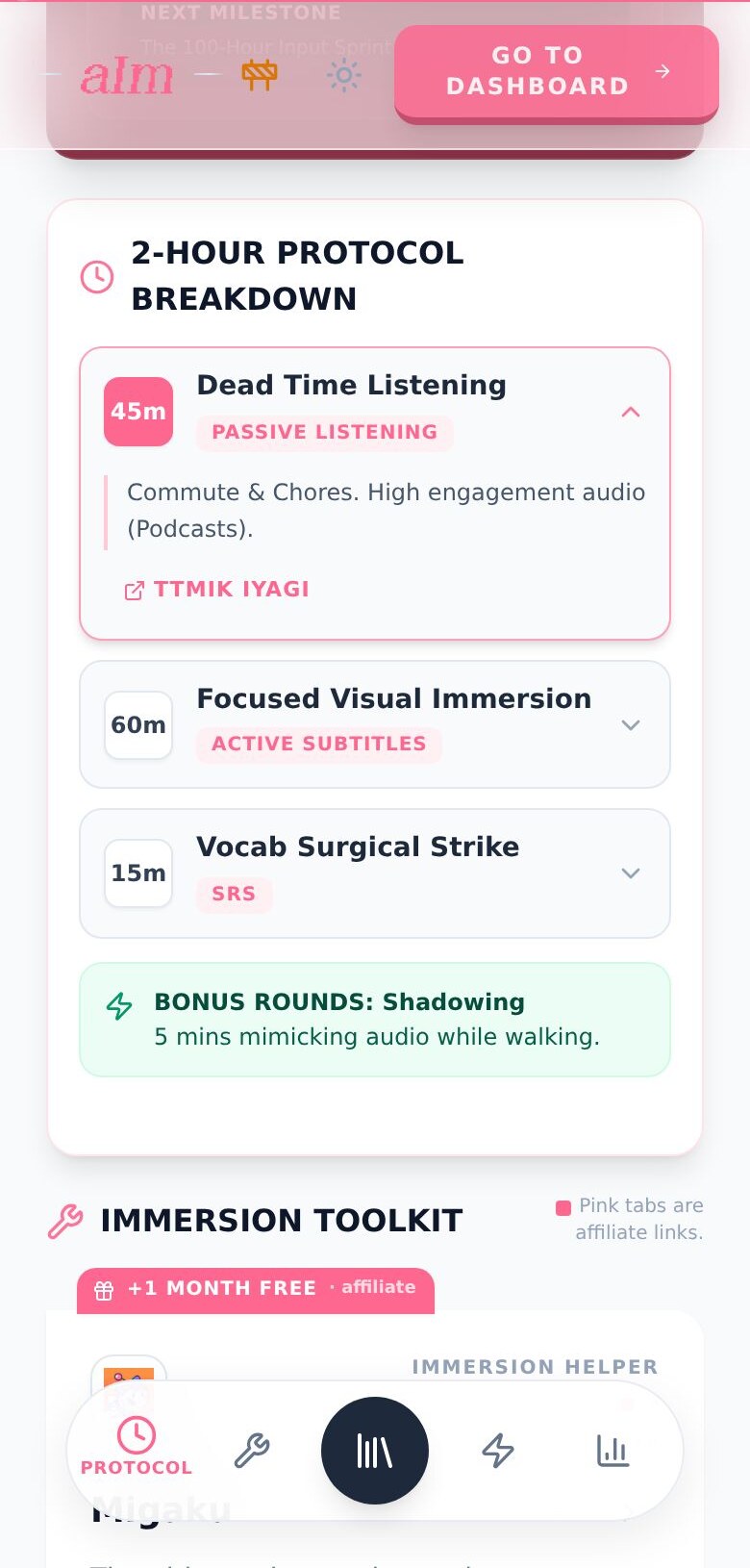
Your day
Your time, split into blocks you can actually do: what to watch, when to listen, for how long. Built around the hours you really have.
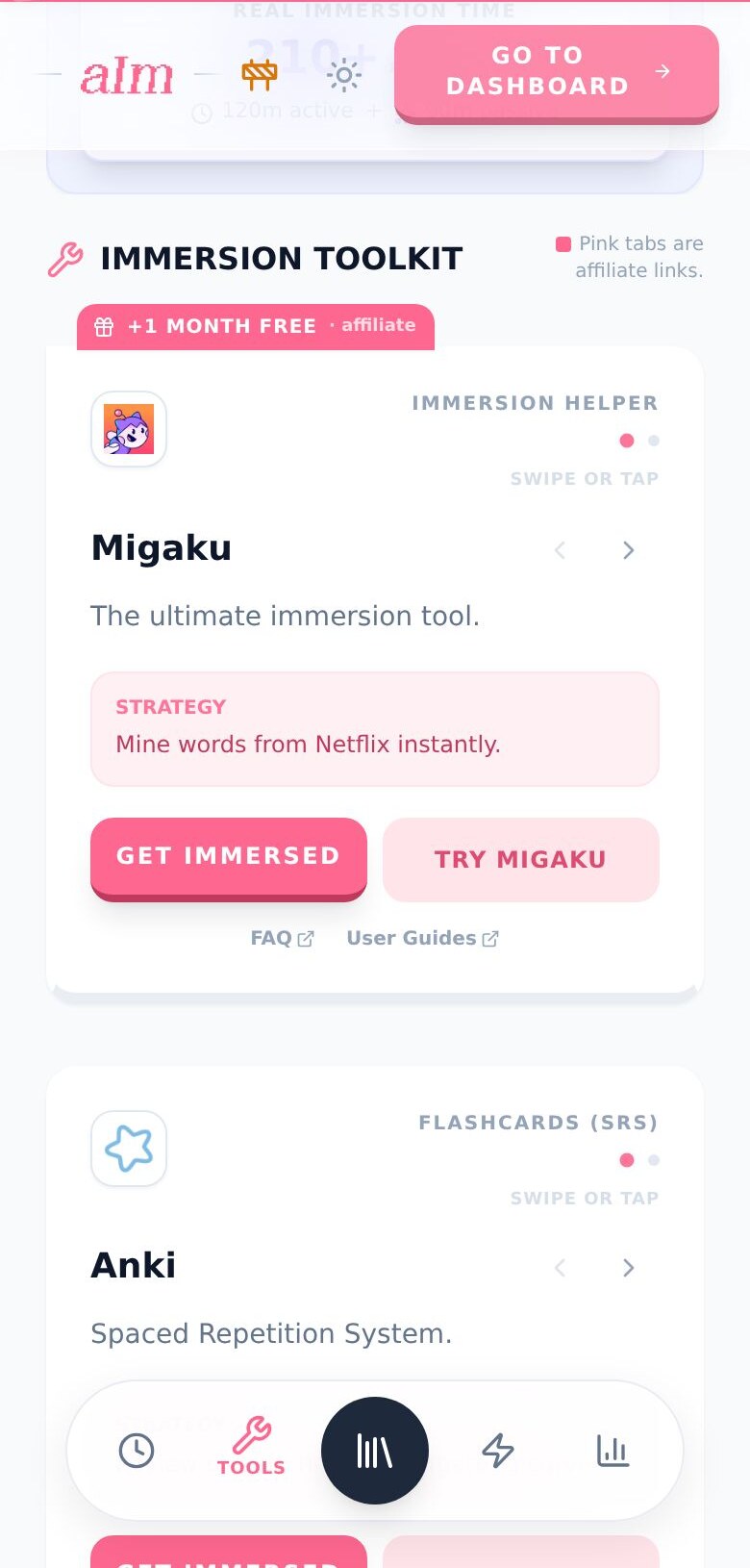
Your tools
Five tools picked for your language: something to watch with, flashcards, a dictionary, a translator and grammar. With a strategy for each.
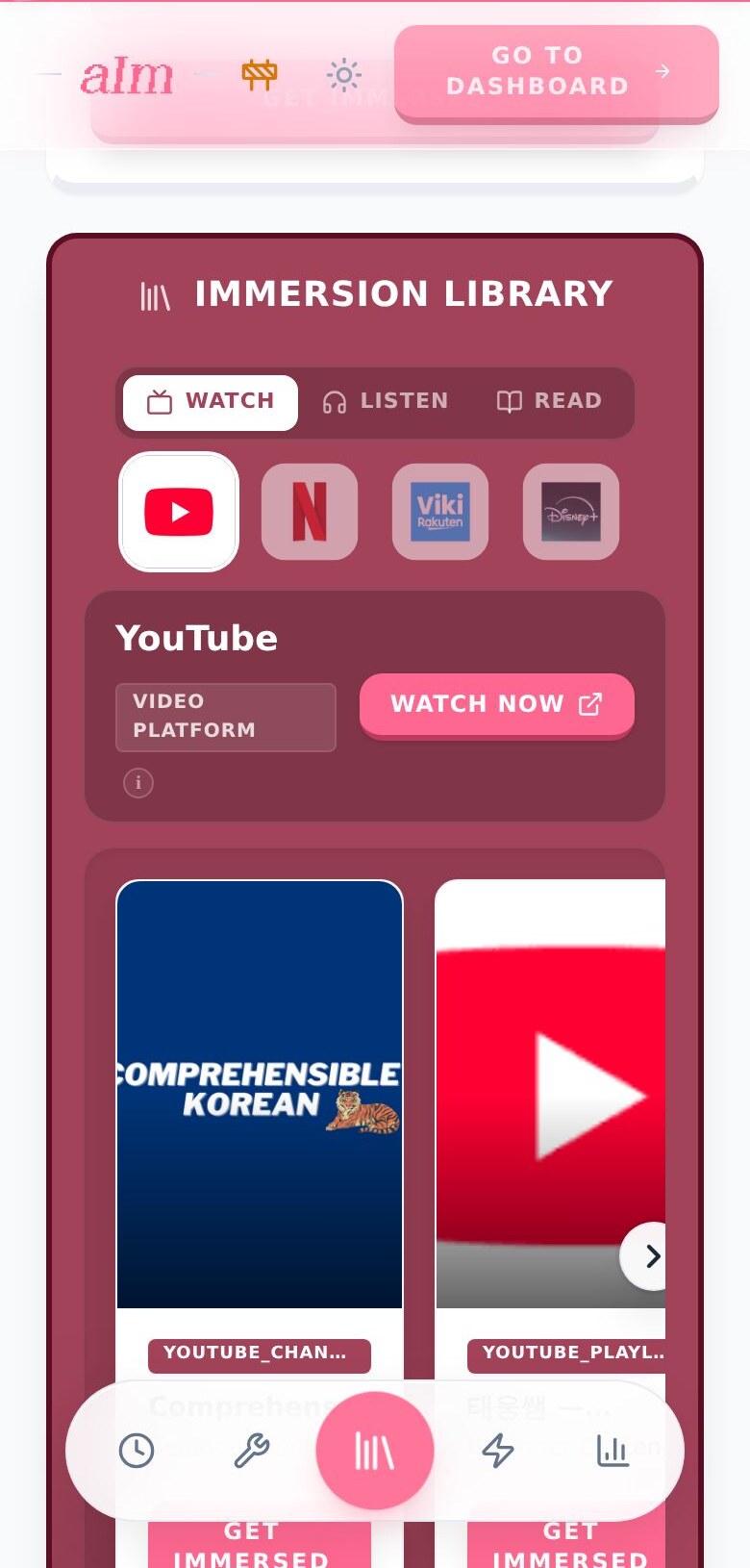
What to watch, listen to and read
Real shows, podcasts, YouTube creators and books in your language, picked for your level. Not a word list.
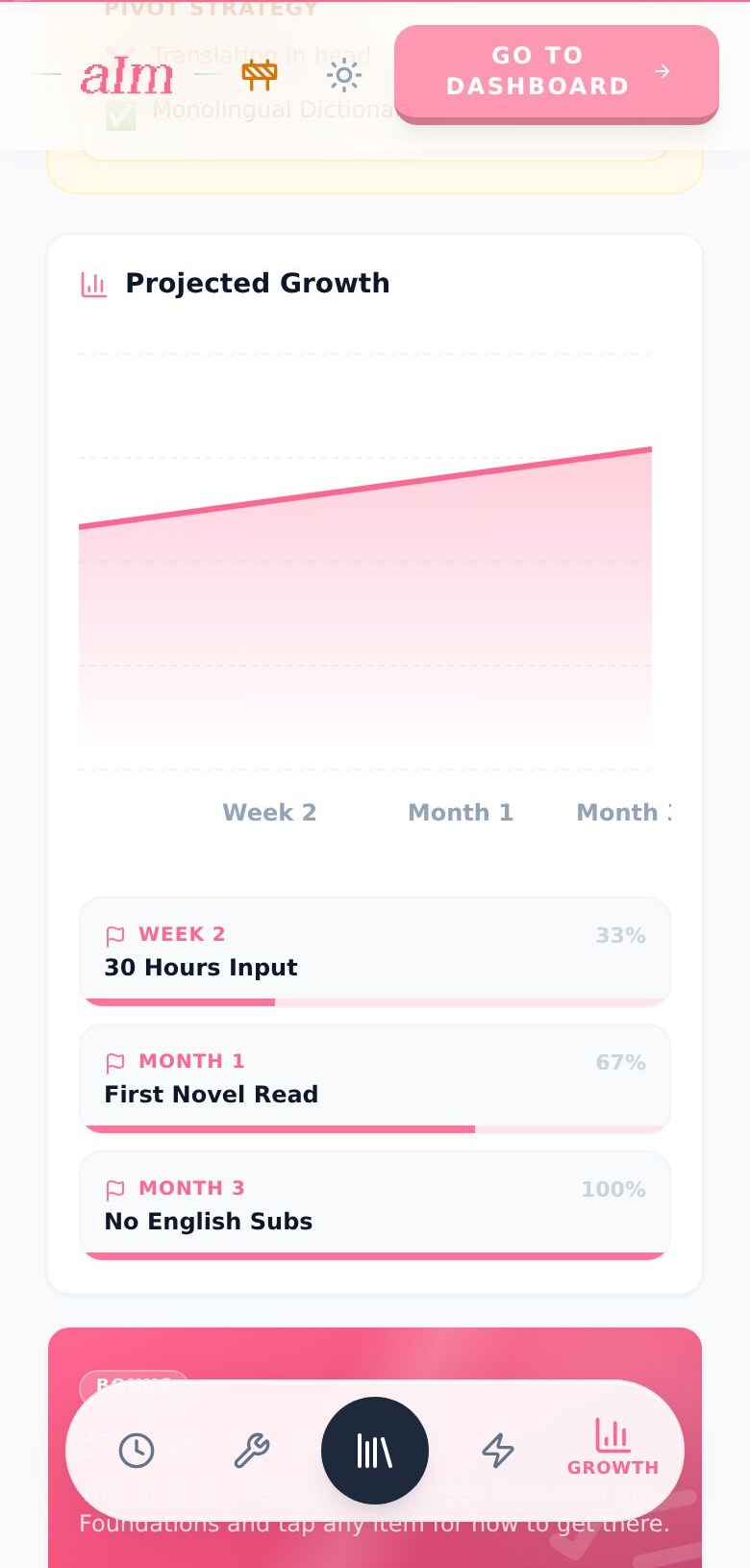
Where you’ll be
A chart of where you could be in two weeks, a month, three months, if you follow it. Honest about where you are now.
All of it is free. Download it as a PDF, share it, post it in the Discord. The plan is yours whether or not you ever pay for anything.
Why the plan looks like this
You pick up a language by understanding it. Not by memorizing rules about it.
You watch a show in your language. You don't know every word, but you follow the story. Your brain quietly works out the words and the grammar while you enjoy it. Do that for enough hours and one day you notice you've stopped translating in your head.
That's immersion: your time with the real thing. Shows, podcasts, YouTube, books, games, people. Classes, apps and tutors still help. They help when they feed that time, instead of replacing it.
It works whatever you're after. Get by on a trip? Talk to your partner's family? Sound native? Same path. The difference is hours, and your plan tells you how many.
“You can only learn for so long. Fluency doesn't live in your learned knowledge. It lives in your time with the real thing.”
The longer version, in the Help Center
Not ready for a plan? Mess around first.
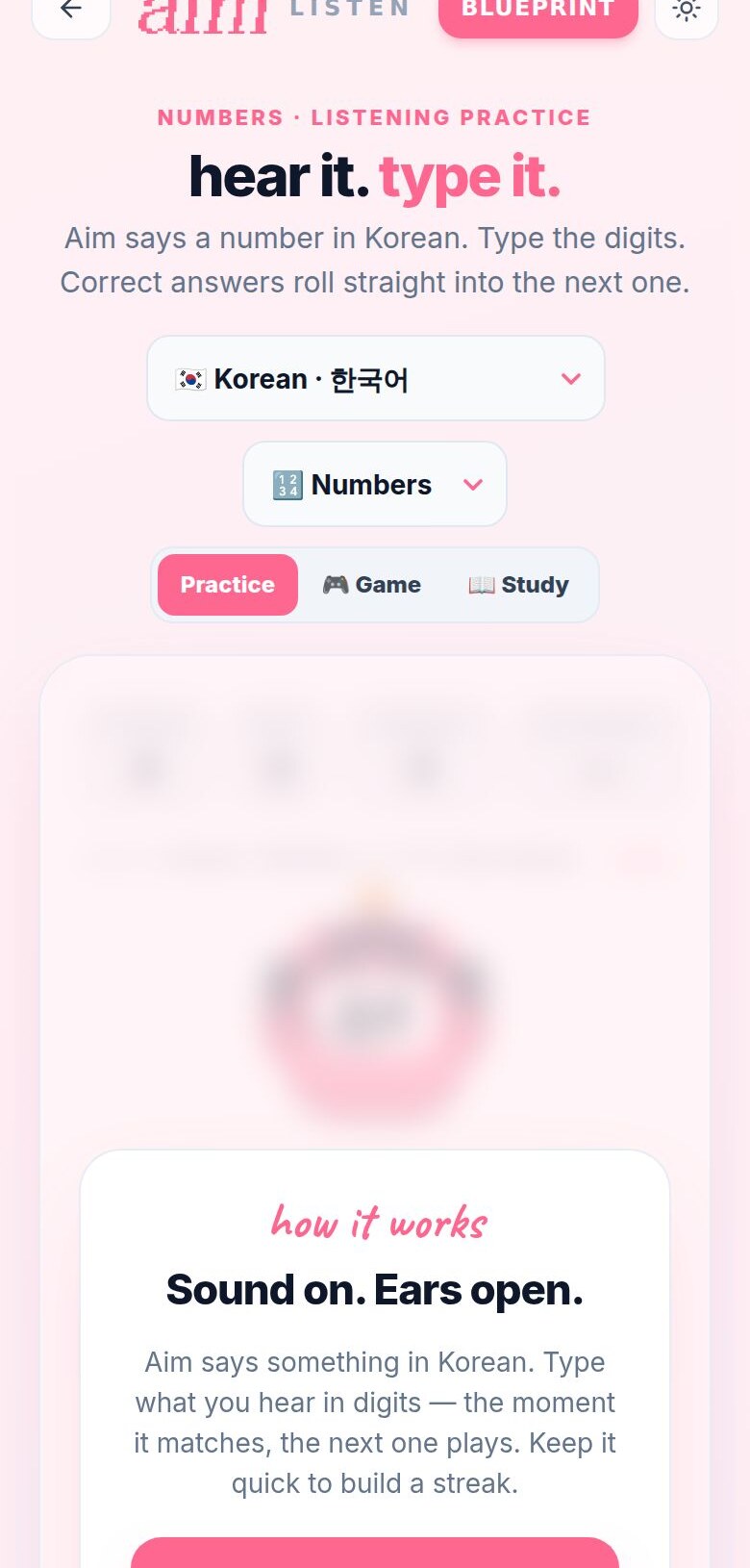
Hear a number. Type what you heard.
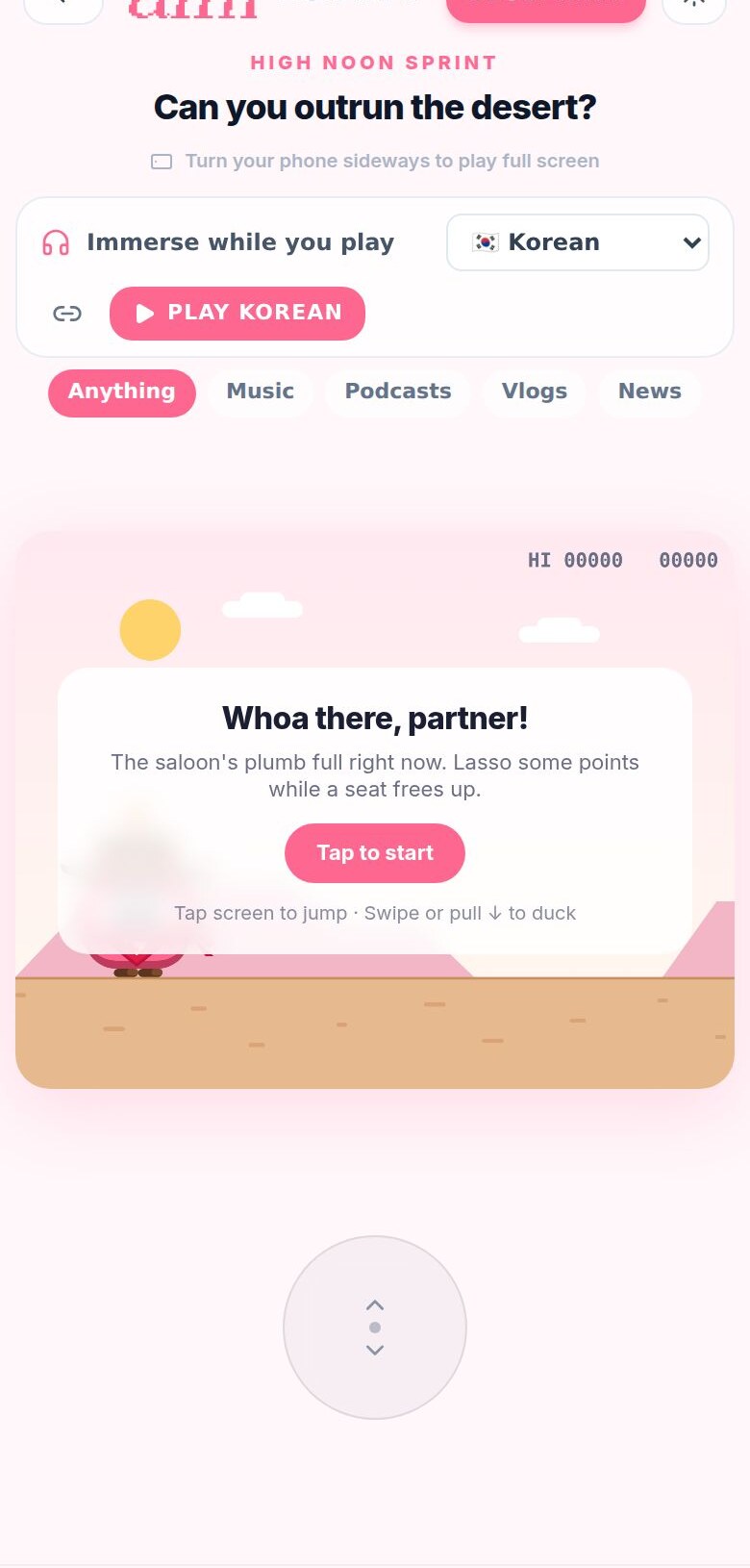
Numbers, years, times, colors, animals, fruit. Twelve languages, three modes. The stuff that trips everyone up at the market, made into a game you can play in a queue. Free, no account. Aim Runner is in there too: put something on in your language and run.
And when you want to do the plan, every day
That's what the app is for.
Plan your day, press play, and Aim tracks every hour. Scroll videos in your language and it counts. Look back and see how far you've come. You don't need any of it on day one. You'll want it the week you realise you're not sure how much you've done.
The plan is free. The daily part is Pro: $60 a year with a free week first, or $9.99 a month.
Why I built it this way
I learned Korean from my room in Maryland. Mostly by watching, listening and reading the real thing, and I tracked every hour of it.
I got to where fluency was supposed to be and still felt a gap: I wasn't the person I'd pictured. Most people who give up don't give up on the language. They give up on that gap, and call themselves failures.
Since then I've built plans with hundreds of learners, and I build them for the person, not the language. My goals aren't your goals, and until I understand yours, getting you there is guesswork. So Aim starts where I do: where you want to be, where you are, what you've tried, how you like to do things. Every answer comes with what it means for you.
Two minutes
Your plan is two minutes away.
Where you are, what you want, what you need to get there. Free, no account, and you can download it when you're done.